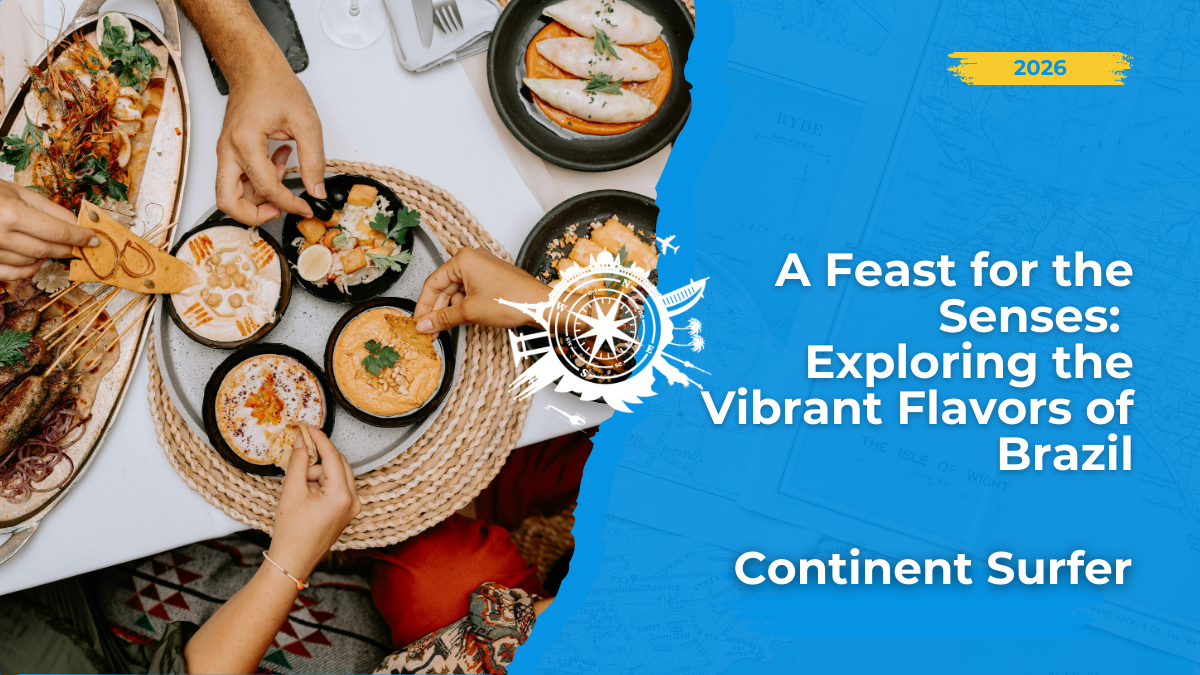
A Feast for the Senses: Exploring the Vibrant Flavors of Brazil
Brazil is a country that doesn’t just eat; it celebrates. Its gastronomy is a colorful tapestry woven from Indigenous roots, Portuguese heritage, and African influences, with a dash of Italian, German, and Japanese immigrant flavors thrown in for good measure.
written by: VA – Continent Surfer
From the heart of the Amazon to the bustling streets of São Paulo, Brazilian food is a reflection of its soul: diverse, hearty, and incredibly welcoming.
More Than Just Beans: Fascinating Food Facts
Before we dive into the menu, here are a few things that make Brazilian food culture unique:
- The “Comida a Quilo” Culture: In Brazil, many restaurants offer a “self-service by the kilo” system. You pile your plate high with whatever catches your eye, weigh it, and pay accordingly. It’s the ultimate way to try everything!
- Pizza with a Twist: Don’t be surprised if you see mashed potatoes, green peas, or even chocolate and strawberries on a pizza in Brazil. They are masters of creative (and controversial) toppings.
- The Sacred Lunch Hour: Lunch is the main meal of the day. It’s usually a sit-down affair featuring the “Holy Trinity” of Brazilian plates: rice, beans, and a protein.

Must-Try Dishes
1. Feijoada: The National Treasure
The undisputed king of Brazilian cuisine. This is a rich, smoky black bean stew simmered with various cuts of pork (sausages, ribs, and sometimes more traditional parts like ears or feet). It is traditionally served on Saturdays and accompanied by white rice, sautéed collard greens (couve), toasted cassava flour (farofa), and orange slices to aid digestion.
2. Pão de Queijo: The Addictive Snack
Hailing from Minas Gerais, these small, chewy cheese bread balls are made with tapioca flour. This makes them naturally gluten-free! They have a crispy crust and a stretchy, cheesy center that is impossible to stop eating.
3. Moqueca: A Coastal Dream
A fragrant seafood stew (usually fish or shrimp) cooked in a clay pot. In the Bahia version, they use coconut milk and dendê (red palm oil), giving it a vibrant orange color and a deep, tropical flavour.

Drinks: From the Amazon to the Beach
- Caipirinha: Brazil’s national cocktail. It’s a simple but potent mix of cachaça (sugar cane hard liquor), lime, sugar, and plenty of ice.
- Guaraná: A popular soda made from an Amazonian fruit. It has a unique, sweet, and slightly berry-like flavour with a natural caffeine kick.
- Cafézinho: Brazilians love their coffee. A cafézinho is a small, intense, and usually very sweet cup of black coffee offered as a sign of hospitality.

Let’s Cook: Brazilian Brigadeiro Recipe
No Brazilian party is complete without these chocolate truffles. They are incredibly easy to make and even easier to love.
Prep time: 10 mins | Cook time: 15 mins | Yields: ~20 balls
Ingredients:
- 1 can (395g) of Sweetened Condensed Milk
- 1 tbsp Unsalted Butter
- 3 tbsp Unsweetened Cocoa Powder
- Chocolate sprinkles (for coating)

Instructions:
- Mix: In a medium non-stick saucepan, combine the condensed milk, butter, and cocoa powder.
- Cook: Place over medium-low heat. Stir constantly with a spatula. You want to cook it until the mixture thickens enough that when you run your spatula through the middle, it creates a “path” that stays open for a few seconds.
- Cool: Pour the mixture onto a buttered plate and let it cool completely to room temperature.
- Roll: Grease your hands with a little butter. Scoop a small amount of the mixture and roll it into a 1-inch ball.
- Coat: Roll the ball in chocolate sprinkles until fully covered.
- Enjoy: Place in mini cupcake liners and serve!
Brazil’s culinary landscape is a reminder that food is the best way to understand a culture. Whether you’re sipping a cold coconut water on Copacabana beach or sharing a massive Feijoada with friends, you’re tasting history.
Did you know? The Power of the “Café com Leite” Era
While you might know that Brazil is the world’s largest coffee producer, did you know that coffee was once so powerful it actually governed the country?
“Between 1889 and 1930, Brazil’s politics were dominated by a system known as “Café com Leit”” (Coffee with Milk). This wasn’t just a breakfast order! The name referred to the political alliance between the two most powerful states: São Paulo (the center of the coffee industry) and Minas Gerais (the hub of dairy production).
The presidents of Brazil were almost exclusively chosen from these two states, alternating between a“coffee man”” and a“”milk man”” This period shaped Brazil’s modern economy and infrastructure, as most of the country’s early railways were built specifically to transport coffee beans from inland plantations to the Atlantic ports. Today, Brazil produces about one-third of all the coffee in the world, but the locals still prefer their cafézinho served in tiny cups—reminding us that even the biggest industries started with a single, small, and very strong cup of coffee.

Like what we do?
If so, please support us, every little counts and is much appreciated!
You will help us to come up with useful information regularly, so please support us every once and a while or even monthly! Thank you!
Source(s):
Original article
Join the Continent Surfer community!
Subscribe to our newsletter and be the first to receive the latest news, useful tips, and exclusive offers!
Comment